
The repair that makes it worse
A timber pile shows decay in the splash zone, so the pile gets wrapped in a fiber-reinforced jacket and grout is pumped into the gap to seal the wood against the water. The pile looks protected. The owner feels the problem is handled.
Often it is not. Where we have tested piles wrapped and grouted with no decay control inside the jacket, the wrapped piles in the splash zone come back in worse condition than the untouched piles standing right beside them. The wrap did not slow the decay. It fed it.
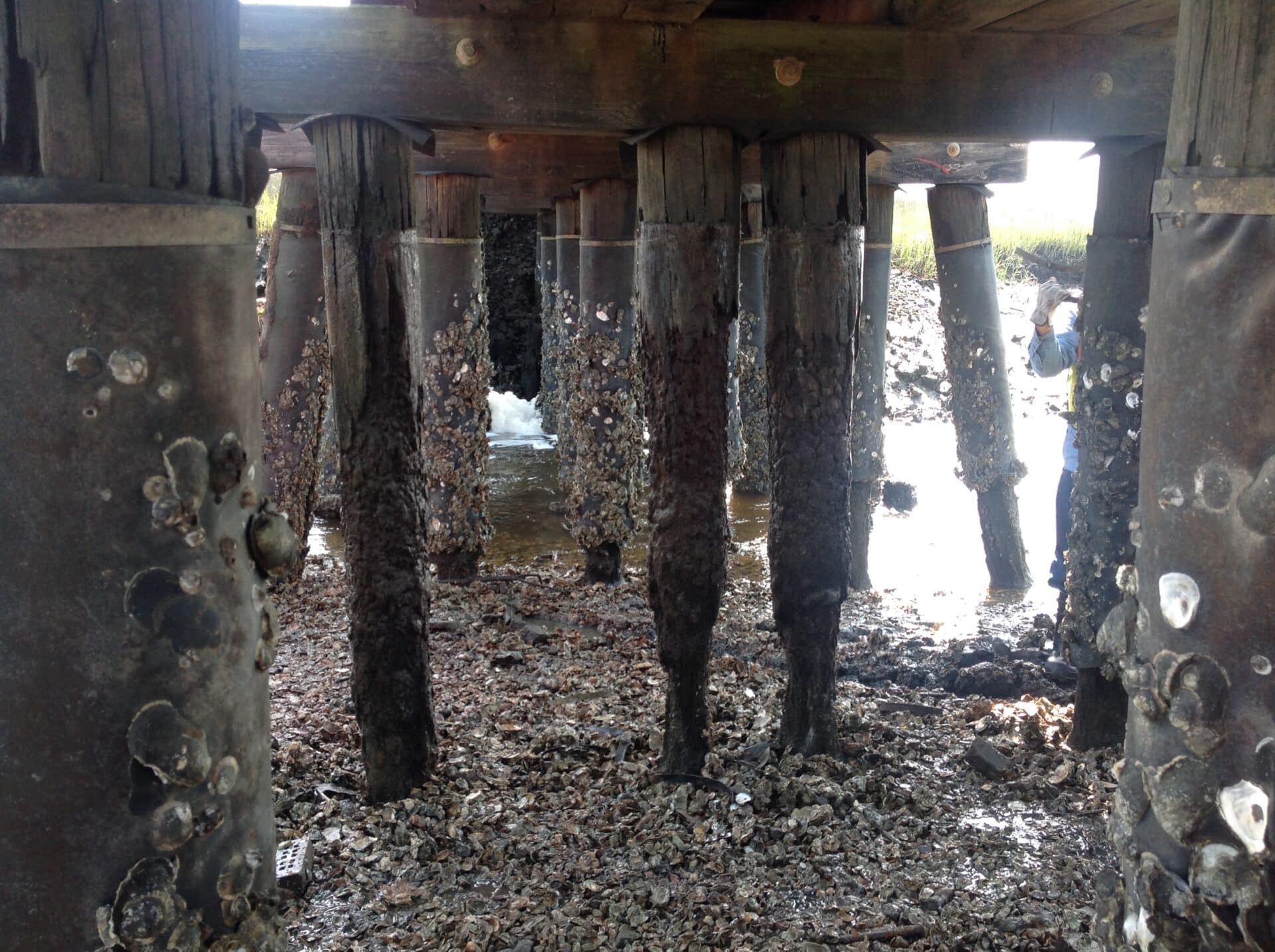
That sounds backward until you look at what a sealed wrap actually does to wet wood.
What the wrap is meant to do
The logic is reasonable on its face. Water, oxygen, and the constant wet-and-dry cycling of the tidal splash zone are what drive decay in a marine pile. A wrap and a grout jacket promise to shut all three out: keep the water off the wood, hold the cross-section together, add a little confinement. On the right member in the right condition, confinement has its place. The trouble starts when a jacket goes over timber that is already wet, in a band that never fully dries.
The physics of why it backfires
Timber is not inert. It takes on water and swells, gives it up and shrinks, and it does this across the grain with real force. Seal a dense hardwood pile inside a rigid wrap and grout and the wood still wants to move. It has nowhere to go.
That swelling becomes pressure against the jacket, and it does not take much to do damage. Dense hardwood crushes across the grain at only one to two thousand psi, a small fraction of what the rigid wrap and grout can carry. So the wood gives way first: the outer fibers crush, the shell cracks, and what you are left with is a sealed, damp, oxygen-starved pocket wrapped around crushed wood, which is close to a perfect recipe for the decay you set out to stop.
A wrap does not let timber breathe. It holds the water against the wood instead of letting it go.
Whatever water finds its way in, through a crack, a joint, or a failed seal, cannot get back out. A bare pile in the splash zone at least dries between tides. A wrapped one stays wet. You have taken a pile that was coping and removed its one chance to recover.
You cannot see any of this from the outside
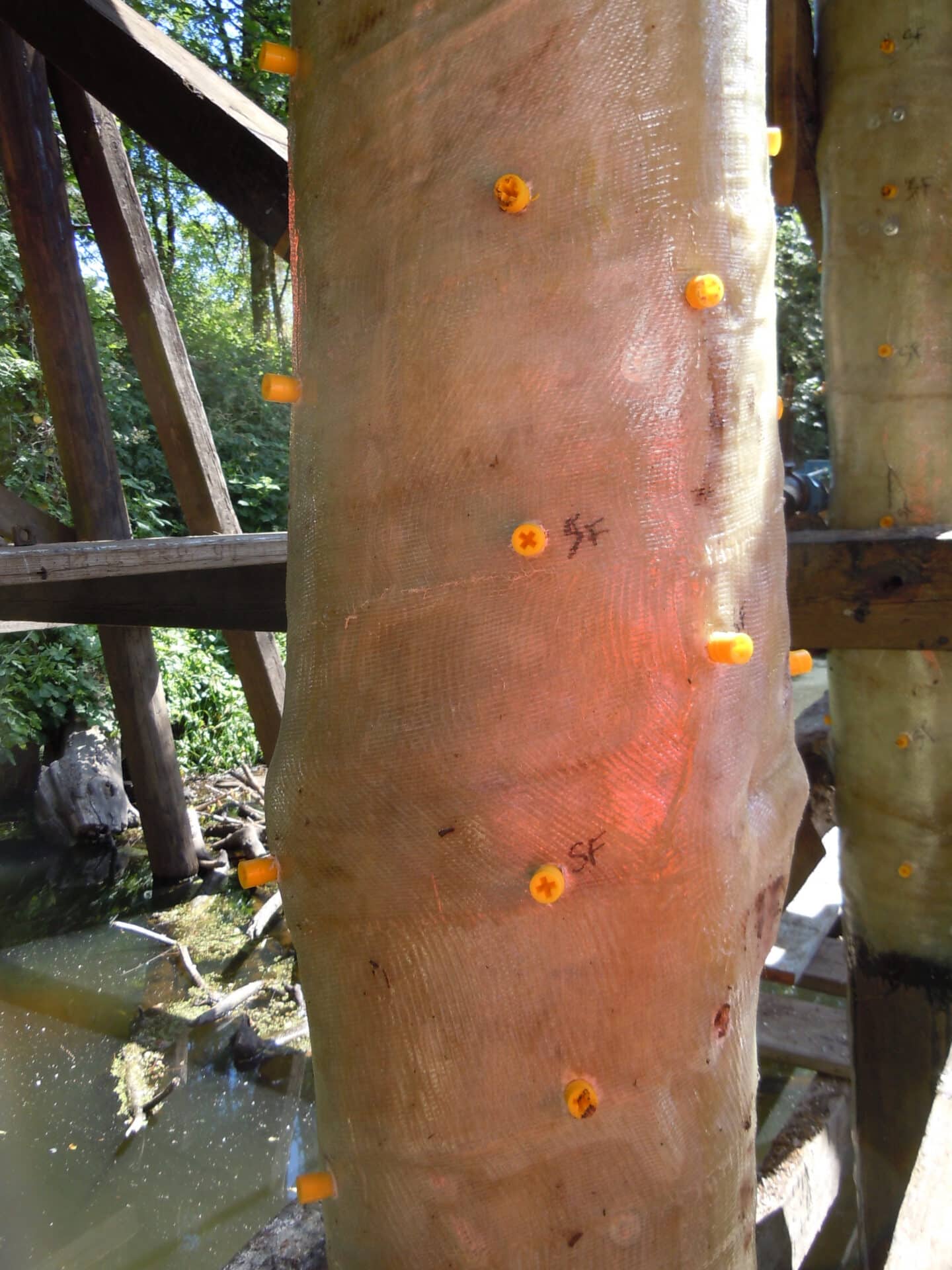
This is what makes the problem dangerous. From the dock a wrapped pile looks finished. Clean. Handled. The damage is happening under the jacket, in the dark, where no walk-by inspection and no hammer tap will ever find it.
The only way to know the real condition is to read the pile from the inside. We send a stress wave through the wood and map where it slows down, because where it slows is where the wood has gone soft. We confirm length and embedment with pile-echo readings and spot-check with fine micro-drilling. Line those results up across wrapped and unwrapped piles and the pattern is not subtle. Where the wrap carried no decay control inside it, the wrapped splash-zone piles are, on average, worse.
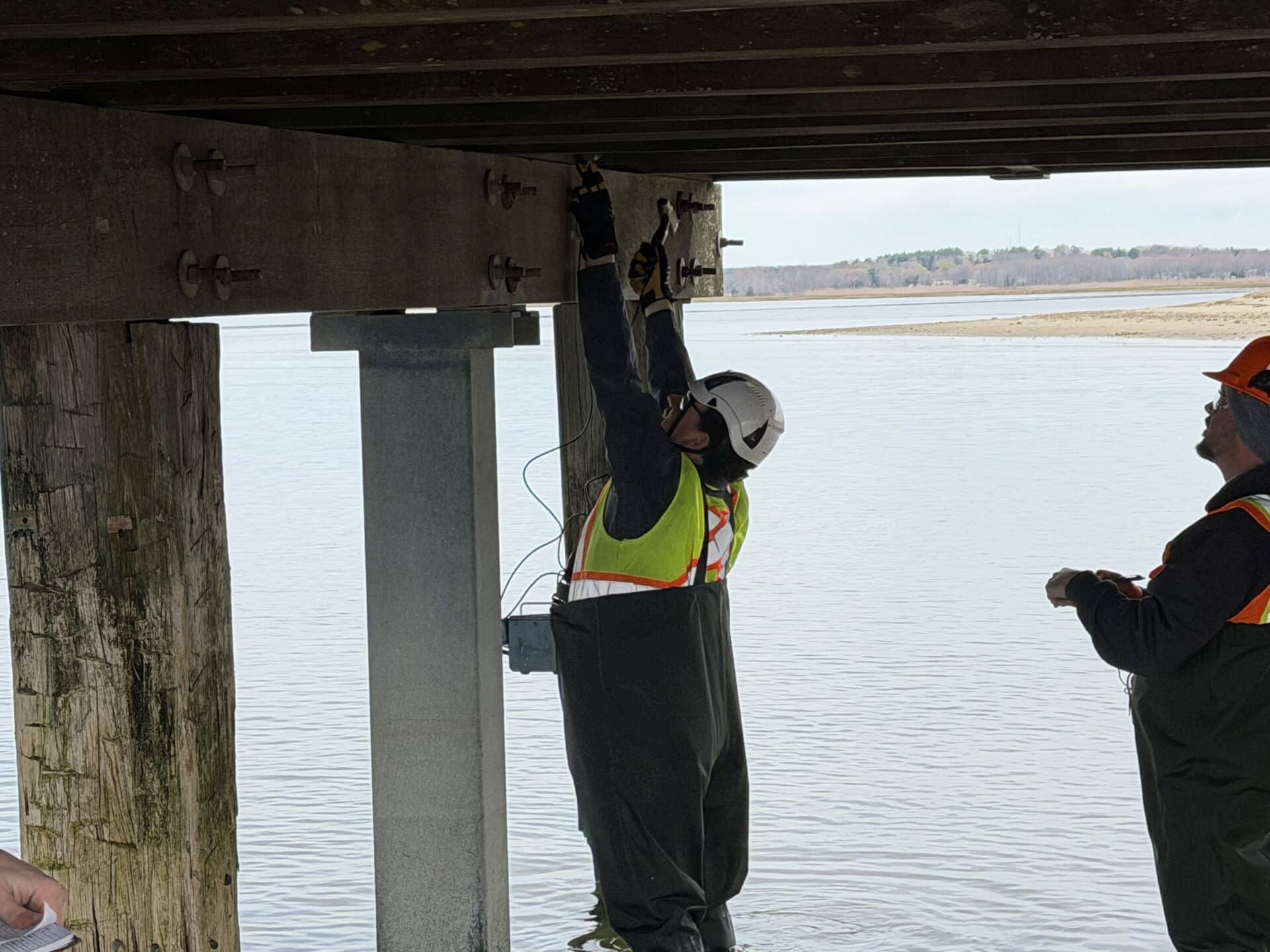
We built our whole practice on a single idea: look at a timber structure from the inside out. A gray, checked, weathered pile can be sound to the core. A smooth, freshly wrapped one can be failing underneath. Appearance is not condition, and on a wrapped pile the two can be opposites.
This is not an argument against fiber reinforcement
Be clear about what the argument is and is not. High-strength fiber reinforcement, designed and bonded to sound wood, is one of the best tools we have for adding capacity to a timber member. We design with it. What fails in the splash zone is not fiber doing its job. It is a jacket sealing wet, decaying wood in a band that never dries, where the wrap was asked to be a waterproof shell instead of a structural reinforcement.
The difference is condition and detailing. Reinforcement belongs on wood that is sound, or on wood that has been cut back to sound material and rebuilt, with the moisture path understood and managed. Wrap first and ask questions later and the wrap becomes part of the problem.
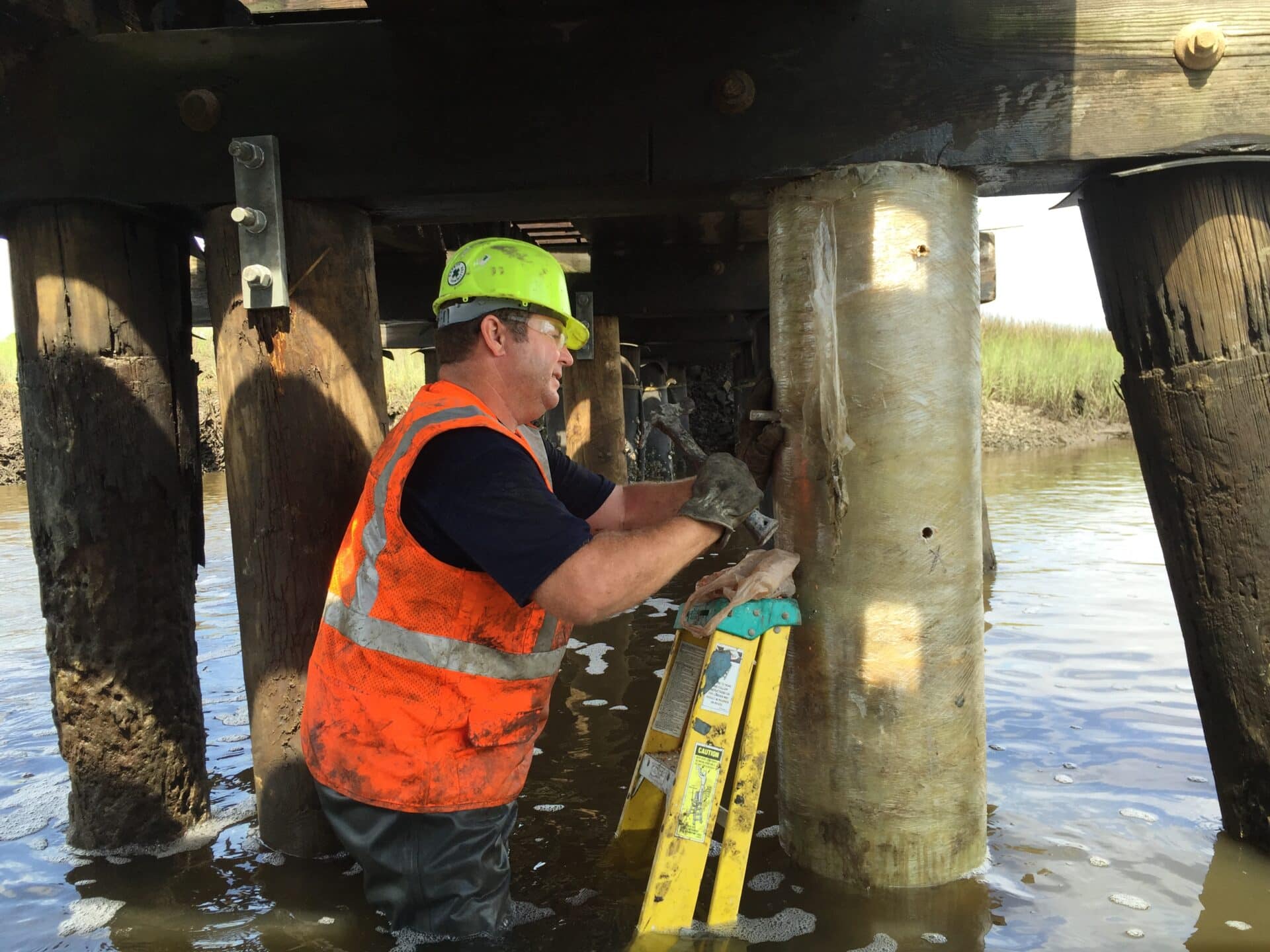
There is also a concrete difference that the failed wraps left out. On a WRD-specified wrap, borate diffusion is mandatory, not optional. We drill holes into the pile, set borate diffuser rods into them, and bung the holes once the wrap is on. The borate moves through the damp wood and keeps fungal activity in check inside the wrap, the one place a sealed jacket would otherwise let decay run unchecked. In the splash zone those rods are renewed every three to five years, because that is how long the dose holds where the wetting is worst. A wrap without that is the wrap that comes back worse.
What to do instead
Start with an inside-out inspection, before any money is committed to a repair. Find out how much of each pile is actually sound and exactly where the loss is. On most timber piles the answer is encouraging. The decay is confined to a narrow band in the splash zone, while the core and everything below the mudline are intact, because without oxygen wood does not rot.
Where the core is still good, a Dutchman patch takes out only the decayed outer shell in the splash zone and replaces it, keeping the sound core and leaving the pile looking original. Where the core itself is broken, segment posting rebuilds the section and restores full capacity. Both are proven, non-proprietary methods, and neither one seals wet wood inside a jacket.
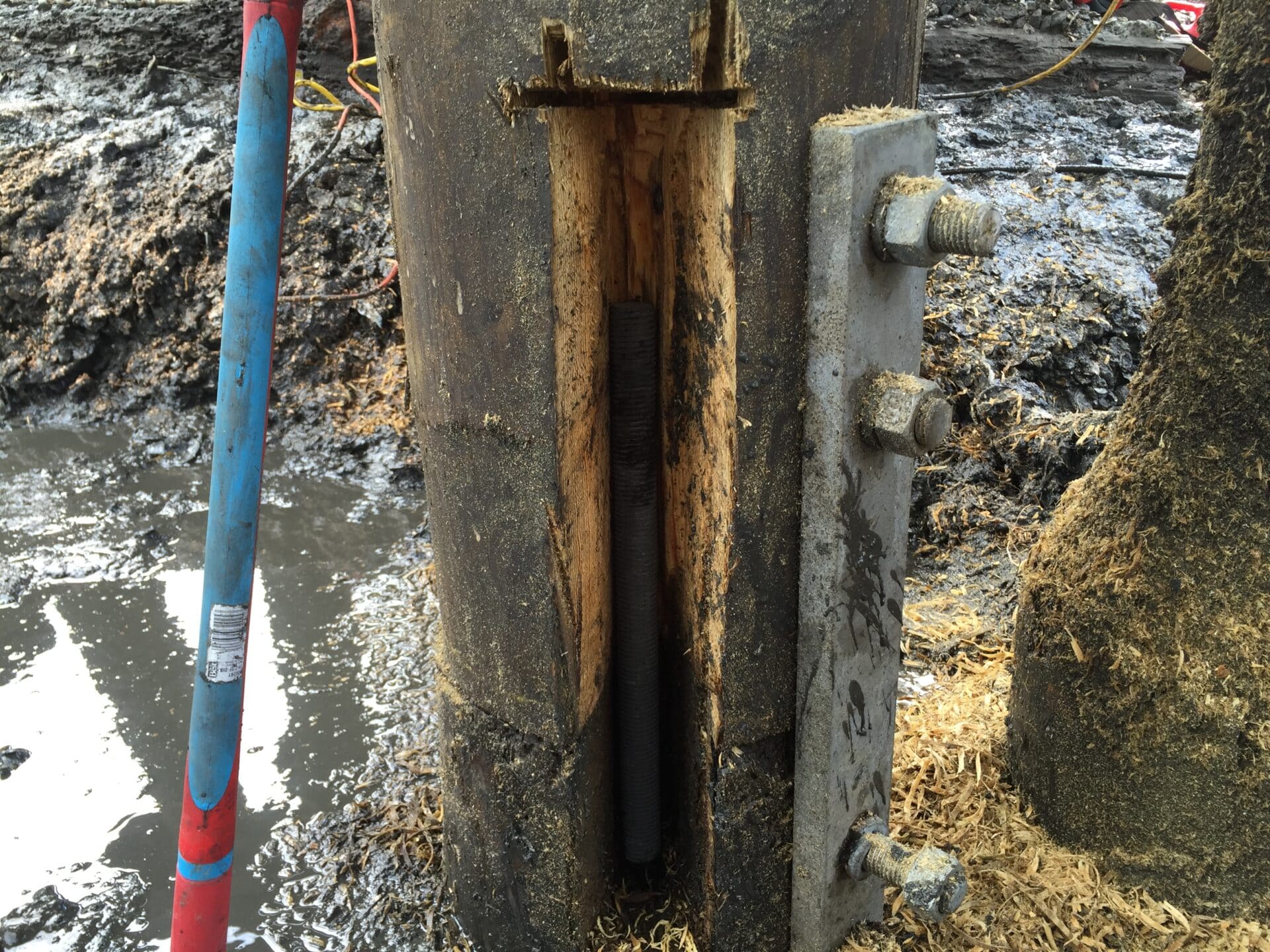
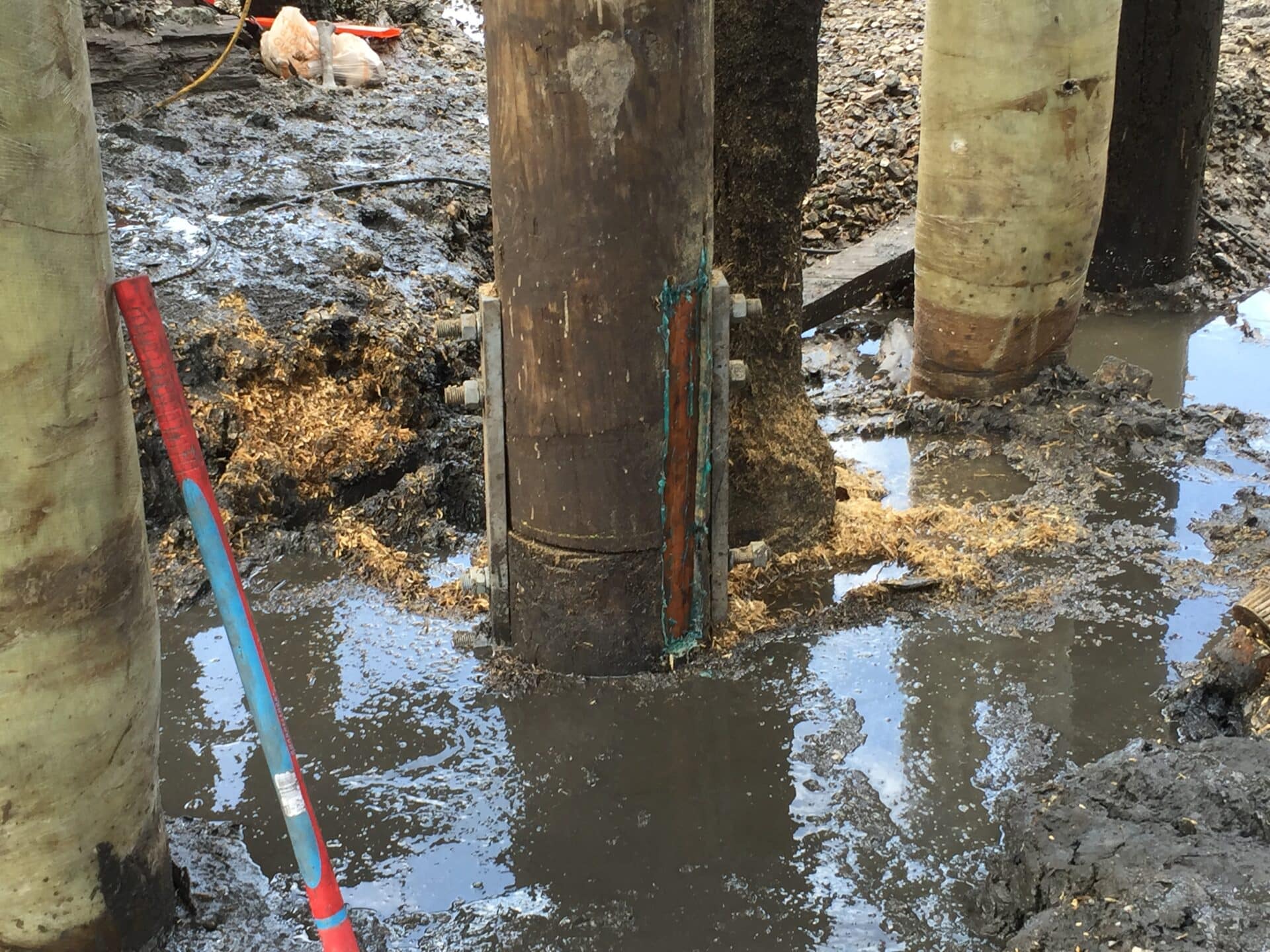
And where an old wrap is already failing, the most useful move is often the simplest. Take it off, let the wood dry, and find out what you are actually dealing with.
For a lot of these wraps, the best thing you can do is remove them.
A timber pile is not disposable and it is not fragile. Read correctly and repaired at the cause instead of the symptom, it can serve for decades more. The mistake is not timber. The mistake is treating a wet, living material as if sealing it away were the same as fixing it.
Before you wrap, read the wood
If you own or manage a timber bridge or a marine structure and someone has proposed a wrap, a grout jacket, or a full replacement, get an independent, non-destructive read on the real condition first. Wood Research and Development is an accredited timber testing, inspection, and engineering firm. We will tell you what the wood is actually doing, and what it will cost to fix the cause rather than the symptom.